Best Solar Cable Options for Your Global Procurement Needs?
In the rapidly evolving renewable energy sector, selecting the right solar cable is crucial for efficiency and safety. The global solar market is projected to reach $223.3 billion by 2026, as highlighted by a recent report from Allied Market Research. As solar installations increase, the demand for quality materials, including solar cables, also rises.
Solar cables serve a vital role in connecting solar panels to inverters and other system components. Quality cables ensure minimal energy loss and longevity. According to the International Energy Agency, solar energy capacity is expected to exceed 1,000 GW by 2025, emphasizing the need for reliable materials. However, not all solar cables are created equal. Issues like temperature resistance and UV stability merit careful consideration.
While various suppliers claim quality products, distinguishing between them can be challenging. Industry professionals often note that only a few manufacturers meet the highest standards. Reflecting on these factors will guide procurement decisions effectively. Making informed choices is essential in this growing market. Choosing the right solar cable is not just about costs; it’s about investing in a sustainable future.
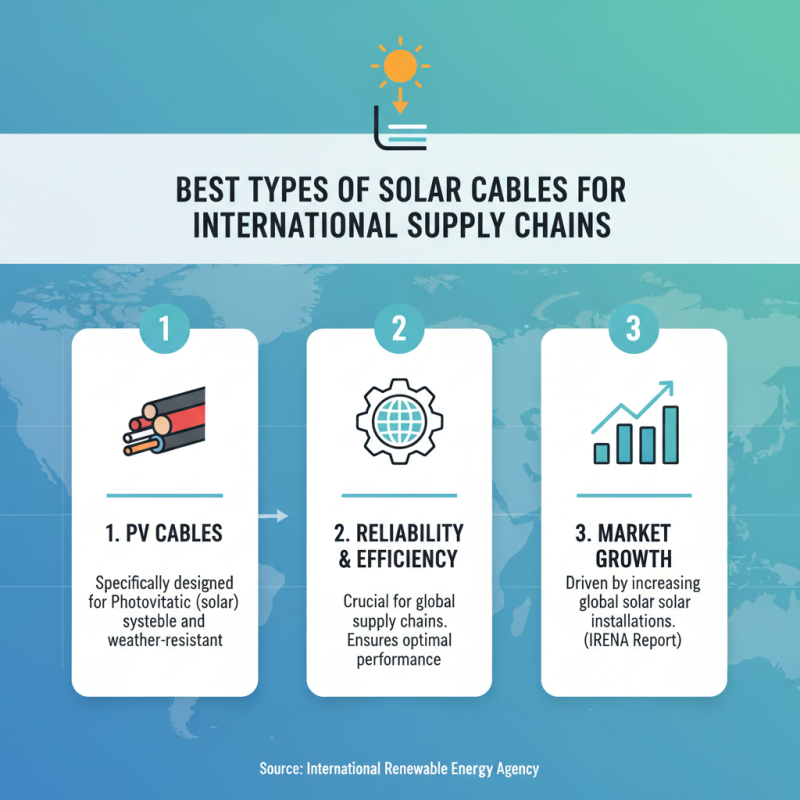
Best Types of Solar Cables for International Supply Chains
When considering solar cables for global supply chains, several types stand out for their reliability and efficiency. The most common types include PV cables, which are designed specifically for photovoltaic systems. According to the International Renewable Energy Agency, the global solar cables market is expected to grow significantly, driven by increasing solar installations worldwide. This growth emphasizes the importance of selecting the right cable to ensure optimal performance.
XLPE insulated cables are gaining popularity due to their excellent thermal properties and resistance to UV radiation. Reports indicate that cables using this insulation can significantly reduce energy loss and have a longer lifespan. Additionally, they are less prone to environmental damage, making them suitable for various climates. However, not all suppliers maintain consistent quality. This inconsistency can cause delays in procurement, highlighting the need for stringent supply chain management.
Another option is H07RN-F rubber cables, which provide flexibility and a high level of protection against abrasion and chemicals. They are suitable for outdoor applications but require careful handling to avoid damage during installation. The growing emphasis on sustainability is also prompting an exploration of biodegradable options. While promising, these cables provoke discussions on their long-term reliability. Balancing innovation with proven technology is vital for effective procurement strategies in this evolving market.
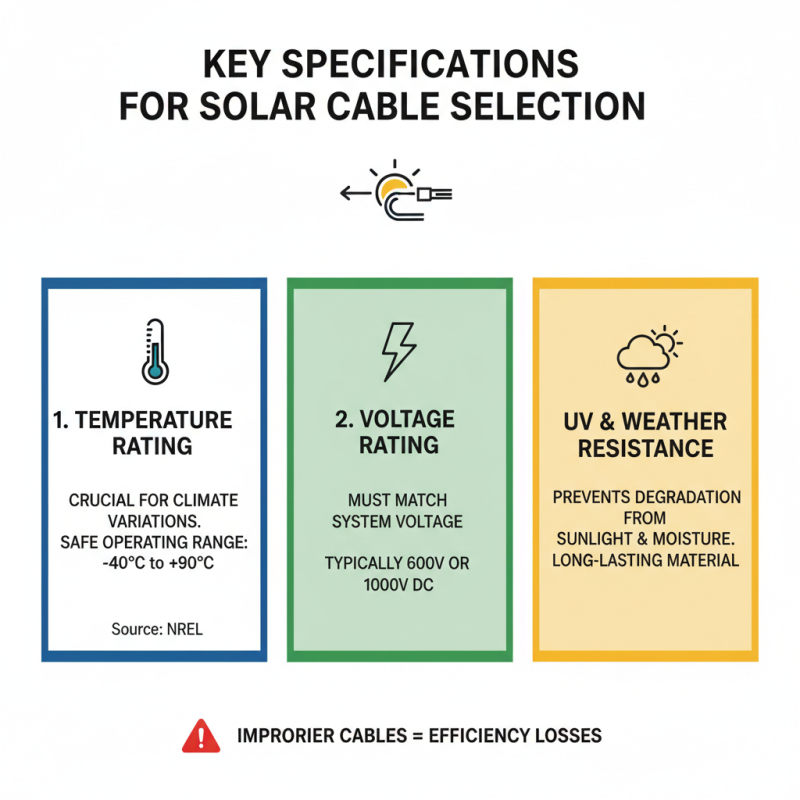
Key Specifications to Consider in Solar Cable Selection
When selecting solar cables, specific key specifications are crucial. The National Renewable Energy Laboratory (NREL) indicates that improper cable choices can lead to significant efficiency losses. For instance, temperature ratings must accommodate varying climates. Typical solar cables should operate safely in temperatures ranging from -40°C to +90°C.
Conductor size is another vital consideration. The American Society for Testing and Materials (ASTM) suggests that larger cables reduce resistive losses. Generally, a 10 AWG cable can be sufficient for systems up to 500 watts, but thicker cables, such as 8 or 6 AWG, are recommended for higher outputs to prevent overheating.
The insulation material also deserves attention. Many cables utilize cross-linked polyethylene (XLPE) for its durability and resistance to UV degradation. The efficacy of a solar installation can diminish if the insulation fails over time. Despite these clear specifications, many procurement teams overlook these factors, which leads to operational inefficiencies. Thoughtful selection can improve system reliability and long-term performance.
Top Manufacturers of Solar Cables Worldwide
When considering solar cable procurement needs, it's essential to focus on quality and reliability. Top manufacturers around the globe offer varying standards. These companies often prioritize durability and efficiency in their products. They understand that solar cables need to withstand harsh environmental conditions. This is critical for maintaining performance over time.
Innovative technology in solar cable manufacturing is not uniform. Some manufacturers excel in insulation materials, while others lead in conductivity. Assessing these factors can help in choosing the best option. Despite advancements, there can be inconsistencies in product quality. It is worth taking the time to evaluate technical specifications and performance data from multiple sources. Seeking expert opinion can also clarify these decisions.
Availability of solar cables might vary widely. While some manufacturers have robust global distribution channels, others may face logistical challenges. This can impact delivery times and availability. Therefore, it is advisable to consider manufacturers with a solid track of reliability. A good choice often balances both innovation and consistency in production practices.
Best Solar Cable Options for Your Global Procurement Needs
| Cable Type |
Conductor Material |
Voltage Rating (V) |
Temperature Rating (°C) |
Length Options (m) |
Applications |
| Solar PV Cable |
Copper |
600 |
-40 to 90 |
1 to 100 |
Solar Panel Connections |
| Solar DC Cable |
Aluminum |
1000 |
-40 to 85 |
10 to 500 |
Inverter to Array |
| Solar AC Cable |
Copper |
600 |
-40 to 90 |
1 to 300 |
Grid Connectivity |
Evaluating Cost-Effectiveness in Solar Cable Procurement
When procuring solar cables, cost-effectiveness is crucial.
This can significantly impact your overall budget. Evaluating different types of solar cables helps in finding the most suitable option.
Quality matters, but so does the price. A balance between these factors can maximize your investment.
Tips:
Always consider the long-term benefits. Cheap options may save you money now but could lead to higher maintenance costs later.
Another important aspect is to analyze vendor reliability. A reputable supplier ensures product quality and timely delivery.
This can reduce downtime, which is essential for projects. Quality certifications can indicate reliable sources.
Tips:
Research vendor history. Look for reviews and case studies. Understanding past performance can guide your decision-making.
In conclusion, continuously reassess your procurement strategies. Ignoring this can lead to missed opportunities for savings or improved efficiency.
Being adaptable is key in the rapidly changing solar market.
Regulations and Standards Affecting Global Solar Cable Market
The global solar cable market is heavily influenced by various regulations and standards. These rules ensure safety, reliability, and efficiency in solar installations. For instance, the International Electrotechnical Commission (IEC) sets specific standards like IEC 60502 and IEC 62852, which govern cable design and installation requirements. Compliance with these standards can enhance the quality of solar products. It may also impact procurement choices in international markets.
Regulatory frameworks vary significantly across regions. In Europe, the EN 50575 standard addresses fire safety in cables used in construction works. Meanwhile, the USA follows guidelines from the National Electric Code (NEC). These regional differences can complicate global sourcing. Companies must navigate various certifications and testing procedures, which may lead to increased costs or delays.
Market reports indicate that these compliance requirements shape consumer preferences. A significant portion of purchasers consider certifications a key factor in their decision-making. However, the need for compliance can sometimes lead to oversights in quality control. As businesses grow, reflecting on how well they align with these standards will become crucial. This evolving regulatory landscape requires constant adaptation and vigilance to ensure sustained market relevance.